Most
bamboo have many tiny thin leaves. Because of this, bamboo tends to
lose
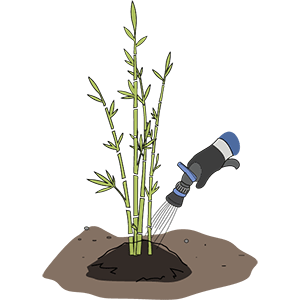
a lot of moisture by transpiration. Watering is critical during
the first month. Daily watering is recommend for best results. It is
uncommon for your site to be
the same as the bamboo native site, so it will need extra water to
acclimate to the new conditions. Rain
water and humid air are the natural conditions of most of our bamboo.
Watering between normal rainfall and even between frost will help the
bamboo even after the initial establishment period of three years. Over
the next couple of weeks, water the plant regularly. If
your
plant does begin to loose leaves, it may be just adjusting to its new
home
and sunlight conditions. Even under most all conditions, the bamboo
will retain 70% of its leaves. After a period of time, it should put on
new leaves
to replace the ones it dropped during the transition. During the hot
summer
time even established bamboo will roll their leaves to prevent
transpiration.
This is a neat characteristic of bamboo so do not be alarmed to see
your
bamboo roll up its leaves. If you water it during very hot times that
is
great and will assist the bamboo during its growth. Once established,
bamboo
needs little care and normal rainfall is generally all that is
needed. Watering daily if you have well drained soil is great!
Remember the bamboo canes on
your
existing division are through growing. Most all the growth now will be
underground . Each Spring new canes will
emerge taller and larger in diameter each year until mature size for
your species and climate zone are reached.
Fertilizers
Please do
not fertilize with chemical
fertilizers such as
13-13-13
etc. for
the first year. Please allow the bamboo root
system
time to establish. Hot chemical fertilizers can burn up the
feeder roots, damaging or killing new bamboo divisions. After a lot of
trials, we have come back to
natural
fertilizing by adding leaves, hay, grass clipping and compost to our
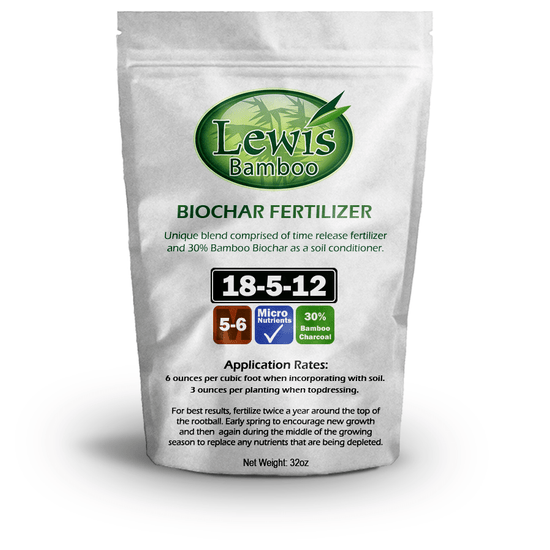
bamboo groves. You can simply use general lawn fertilizer such as
8-8-8 as
directed after one full year in the ground. The three numbers
are important
factors. The first number represents nitrogen. Nitrogen is the element
for growth. the second number is phosphorus and it has to do with the
transfer of carbohydrates. Carbs are essential for the bamboo to
store nourishment in the rhizomes. The last number represents
potassium and is necessary for photosynthesis. This is very important
for the plant's metabolism. Extra amounts of this element helps the
bamboo to withstand drought, heat and cold.
Sun
The larger the bamboo the more direct
sun light it should have is the general rule. The large temperate
species of bamboo such as the ones we grow are woodland under story
plants. They are found in their natural habitat at the edge of forest.
They will grow into the shaded areas and outward into full sun light.
Smaller shrub bamboo under 16 feet in height require less direct
sunlight conditions and will be more likely to thrive in partly shaded
planting sites. Ground cover bamboo 6 feet and under love shaded sites
and will do best out of the direct sunlight.
Shade
This term is confusing to many and
hopefully we can shed some light on the subject (sorry). There
are basically three categories of shaded sites. The first type of shaded site
will be deep shade. These sites never receive direct sunlight
during any season of the year. These sites are not in the forest, but
within the city where buildings, overhangs and other man made
structures completely block sun light year around. Sites under most
trees will receive filtered sun during Fall and Winter months unless
the trees are evergreen. Evergreen trees can provide deep shade if the
branches and foliage are dense enough. Ground cover and
shrub bamboo do fair in these planting sites.
The second type of shade are sites where the
sunlight gets through during different times of the day. This type of
shade changes with the time of year and day. It is provided by natural
obstructions such as trees and bushes. Ground cover and shrub bamboo do
well in these planting sites. Timber bamboo are slower to establish
their root system (rhizomes) in these planting sites. Once established,
timber bamboo can do quite well with the grove having a tall canopy of
foliage due to the reduced lighting. Lower limbs on the canes are
usually absent in these shaded sites. The bamboo compensates by
producing more canes and taller canes.
The third type of shade is caused by man made
structures such as buildings or walls. These structures allow full or
direct sunlight through in the morning or afternoon only. So these
sites while receiving direct or intense sunlight do so for only part
of the day. Timber bamboo can grow is this type of shade with no
problem and is a common planting site for many bamboo.
Our
Mail
Order Warranty
Acceptance of the bamboo implies that the buyer agrees the
bamboo is healthy. We accept no responsibility for damage resulting
from unpacking, usage or care of the bamboo.
If you are
unhappy with
the bamboo for any reason when it arrives, just ship the bamboo back
within 30 days
for a full refund of the bamboo price. Returned
bamboo
should be packaged as they were when shipped and sent UPS ground.
Click here to go to our
'Policy' page for
more details.