Lewis Bamboo, Inc. - Simple Planting and Care of your new bamboo plants.


How to plant

Your bamboo should still have a moist root ball and the leaves should be green ( during the Spring leaf exchange will occur so some brown leaves will be present the weeks prior to new leaves forming ). Handle your bamboo by the root ball only. Remove all packing material (tape, plastic, brace pole, and paper) from around the plant, being careful not to damage the root ball or any new shoots. If new shoots, limbs or foliage is broken the bamboo will replace these.  Please plant or pot the bamboo as soon as possible. Do not let the plant dry out before planting. Do not divide your new bamboo divisions, this will void your 30 day warranty and  will not accelerate the bamboo growth. It will actually set your growth rate back. You may place the root ball in a few inches of water (do not cover the entire root ball) for a few hours before planting. If you cannot plant the bamboo within a day or two,  just open the wrapping on the top of each root ball.  Add 1 cup of water every two days until you can plant them. Provide plenty of light, but keep out of the direct sun so the root ball will not dry out completely until planted.

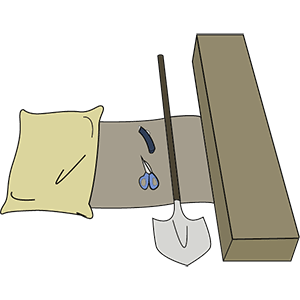
With bamboo, dig the hole at least three times the size of the root ball.  The larger the soil area you loosen up, the faster the bamboo will spread.  Back fill your holes with good topsoil mixed with some composted material such as composted manure that any gardening shop sells. In our area this sells for around $1.50 for a 40 lb. bag. This will help the rhizomes (roots) get off to a good start no matter what soil conditions you may have.

Make a doughnut depression to help keep the water around the plant. Always mulch to help retain the moisture between watering. Also this will help protect the rhizomes in colder regions. We prefer leaves or grass clippings as most bark mulch attracts termites and voles ( mice like rodents that can damage new canes).  Once again, mulch, mulch, you have to mulch to hold the water in and prevent evaporation.  Here in warm climate zone 7, we mulch 6 to 8 inches. In colder zones mulch more than 8 inches for the up coming winter.

Watering

This is the most important part. Watering will help establish your planting and produce better results. Over the next couple of weeks, daily watering is recommended. If your plant does begin to loose leaves, it may be just adjusting to its new home and sunlight conditions. Even under most all conditions, the bamboo will retain 70% of its leaves. After a period of time, it should put on new leaves to replace the ones it dropped during the transition. If any stress like defoliation is noticed increase watering times. Water is the key for health bamboo. During the hot summertime even established bamboo will roll their leaves to prevent transpiration. This is a neat characteristic of bamboo so, do not be alarmed to see your bamboo roll up its leaves. If you water it during very hot times that is great and will assist the bamboo during its growth. Once established, bamboo needs little care and normal rainfall is generally all that is needed.  Watering daily if you have well drained soil is great! The only time you should not water, is when the bamboo is sitting in standing water.

Remember the bamboo canes on your existing division are through growing. Most all the growth now will be underground . Each Spring new canes will emerge taller and larger in diameter each year until mature size for your species and climate zone are reached.


Fertilizers

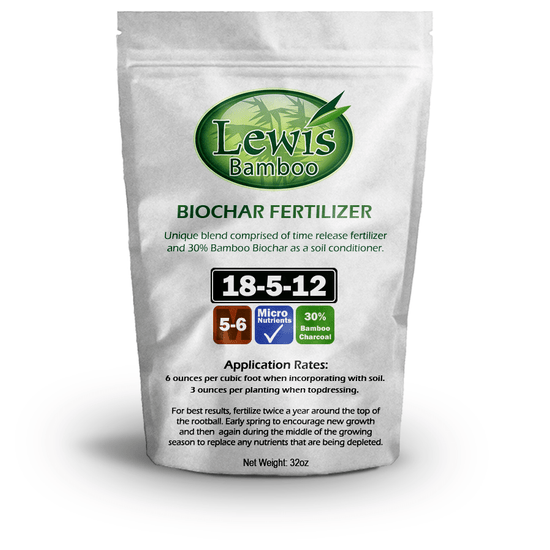
Please do not fertilize with chemical fertilizers ( 13-13-13 etc.) for the first year and allow the bamboo's root system time to establish.  Hot chemical fertilizers can burn up the feeder roots, damaging or killing new bamboo divisions. After a lot of trials, we have come back to natural fertilizing by adding leaves, hay, grass clipping and compost to our bamboo groves.  If you don't have access to organic material, a time release fertilizer or a general lawn fertilizer such as 8-8-8 works best. Just use as directed.
The three numbers of fertilizers are important factors. The first number represents nitrogen. Nitrogen is the element for growth. the second number is phosphorus and it has to do with the transfer of carbohydrates.  Carbs are essential for the bamboo to store nourishment in the rhizomes.  The last number represents potassium and is necessary for photosynthesis. This is very important for the plant's metabolism. Extra amounts of this element helps the bamboo to withstand drought, heat and cold.


Contact us: 205-686-5728  Cell: 205-292-0536 
E-mail: roger@lewisbamboo.com


Back to Index